
How to Create Meta Ads: A Step-by-Step Guide for High-Converting Campaigns
Meta advertising has become one of the most powerful ways to reach targeted audiences on Facebook and Instagram. However, many businesses struggle because they don’t understand how to create Meta ads strategically. Successful campaigns require more than clicking the “boost” button—they need proper setup, data-driven decisions, and continuous optimization.
This guide explains how to create Meta ads step by step, using proven practices that align with Meta’s algorithm and modern SEO standards.
What Are Meta Ads?
Meta ads are paid advertisements that appear across Meta platforms, including Facebook, Instagram, Messenger, and the Audience Network. These ads allow businesses to promote products, services, or content to highly targeted audiences based on interests, behavior, and demographics.
Learning how to create Meta ads correctly helps businesses control costs, improve conversions, and scale campaigns sustainably.
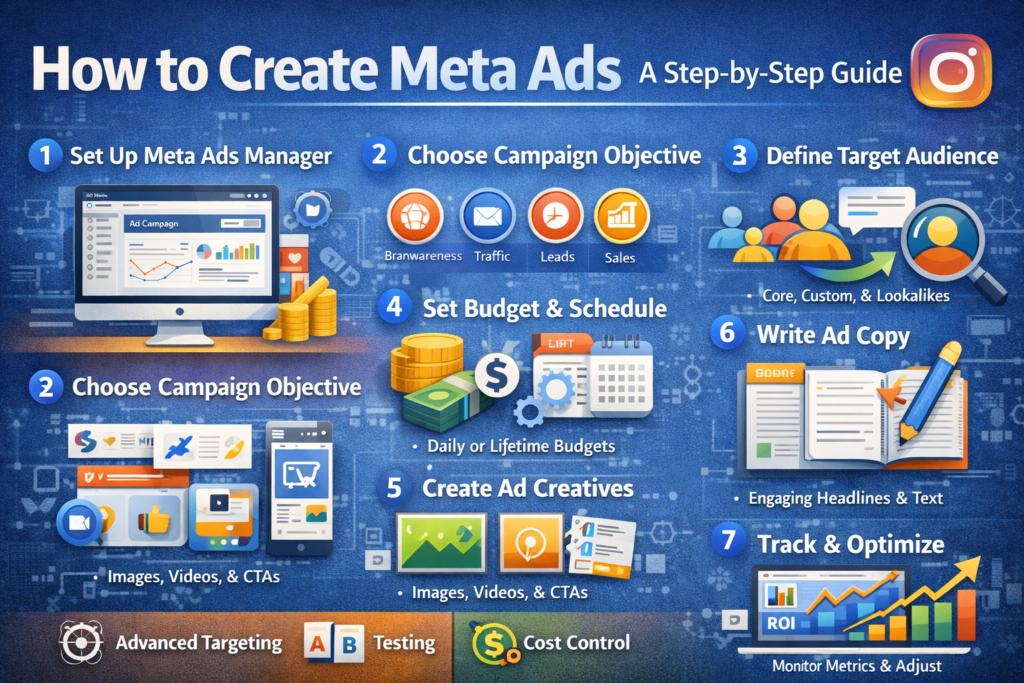
Step 1: Set Up Meta Ads Manager Properly
Before learning how to create Meta ads, you must have access to Meta Ads Manager. This is the official platform where all professional Meta advertising is managed.
What You Need
A Facebook Business Manager account
A connected Facebook Page
An Instagram account (optional but recommended)
A payment method
Once everything is connected, Meta Ads Manager gives you full control over campaigns, audiences, and performance tracking.
Step 2: Choose the Right Campaign Objective
Selecting the correct objective is one of the most critical steps when learning how to create Meta ads. The objective tells Meta’s algorithm what result you want.
Common Objectives
Brand Awareness
Traffic
Engagement
Leads
Sales (Conversions)
If your goal is sales, always choose a conversion-based objective. Choosing the wrong objective can waste budget even if your ad looks great.
Step 3: Define Your Target Audience
Audience targeting plays a massive role in how Meta ads perform. When learning how to create Meta ads, advertisers must focus on relevance rather than reach.
Types of Audiences
Core Audiences: Based on interests, age, location, and behaviors
Custom Audiences: Retarget website visitors or previous customers
Lookalike Audiences: Reach people similar to your best customers
Starting with a well-defined audience improves click-through rates and reduces ad costs.
Step 4: Set Budget and Schedule Wisely
Budgeting is where many beginners fail while learning how to create Meta ads. Meta allows both daily and lifetime budgets.
Best Budget Practices
Start with a small daily budget
Avoid aggressive scaling in the first 48 hours
Allow the algorithm time to optimize
A stable budget helps Meta’s system collect enough data to deliver better results over time.
Step 5: Create High-Quality Ad Creatives
Creatives are what users actually see. Even if targeting is perfect, poor creatives will kill performance. When understanding how to create Meta ads, focus on clarity and value.
Creative Best Practices
Use clear visuals or short videos
Highlight one core benefit
Write simple, conversational ad copy
Use a strong call-to-action
Meta favors ads that keep users engaged, so avoid overly promotional language.
Step 6: Write Effective Ad Copy
Ad copy should speak directly to your audience’s problem or desire. A key part of how to create Meta ads successfully is matching your message to the user’s intent.
Tips for Better Copy
Address pain points early
Use short paragraphs
Focus on outcomes, not features
Test multiple variations
Testing different versions helps identify what resonates best with your audience.
Step 7: Track Performance and Optimize
Creating ads is only half the process. Knowing how to create Meta ads also means understanding how to analyze results.
Metrics to Monitor
Click-through rate (CTR)
Cost per result
Conversion rate
Return on ad spend (ROAS)
Pause underperforming ads, scale winning ones slowly, and refresh creatives regularly to avoid ad fatigue.
Common Mistakes to Avoid
Many advertisers fail not because Meta ads don’t work, but because they skip fundamentals.
Avoid:
Changing settings too frequently
Targeting overly broad audiences
Ignoring conversion tracking
Scaling budgets too fast
Patience and data-driven decisions are essential when mastering how to create Meta ads.
Why Meta Ads Build Long-Term Authority
From an E-E-A-T perspective, Meta ads reward advertisers who demonstrate experience, consistency, and trustworthiness. Campaigns that deliver value to users are favored by the algorithm and perform better over time.
Brands that follow ethical advertising practices and focus on user experience gain long-term credibility and sustainable growth.
Final Thoughts
Learning how to create Meta ads is a skill that improves with testing, analysis, and optimization. By choosing the right objective, targeting the correct audience, creating strong creatives, and tracking performance, businesses can build profitable advertising systems.
When done correctly, Meta ads are not an expense—they are a scalable growth engine.